

Fall Migration: One of Nature’s Greatest Journeys
September 21, 2025
Posted by Lake Erie Nature and Science Center
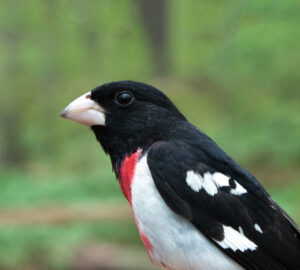
There’s something truly majestic about autumn in Northeast Ohio.
As the leaves begin their colorful transformation and the air carries that first crisp hint of winter, we become witnesses to one of nature’s most extraordinary phenomena: fall migration.
Our region — blessed with diverse forests, sprawling grasslands and the diverse ecosystem of Lake Erie — serves as a vital waypoint along the highways in the sky.
Perhaps no migration captures our imagination quite like that of the monarch butterfly.
Each fall, millions of monarchs embark on their very first (and only) journey of up to 3,000 miles to the mountains of southwestern Mexico.
These incredible travelers — some no bigger than the palm of your hand — can cover more than 100 miles in a single day under the right conditions.
While they are seen all over our area at this time of year, they love lakefront woodlots and late-blooming flowers like asters and goldenrod as they fuel up for their epic journey south.
On the slightly larger side — but still weighing less than four paperclips — are Ohio’s ruby-throated hummingbirds.
These emerald gems travel all the way to Central and South America, including a harrowing 500-mile, nonstop flight across the Gulf of Mexico.
If you’d like to provide a pit stop on their journey, simply hang a nectar feeder with a mixture of one part pure cane sugar to four parts water.
Just remember to change it daily during hot weather — fermented sugar water can be toxic to these precious travelers.
As daylight fades, Ohio’s tree bats — Eastern Red, hoary and silver-haired — are just beginning their own southern adventure.
These nocturnal travelers follow the insects south, seeking warmer climates and abundant food sources.
If you’re an early riser or evening stroller, keep your eyes on the sky around sunrise and sunset. You might be rewarded with the sight of these graceful fliers swooping and diving as they feast on insects before continuing their journey.
In addition to the tree bats, millions of songbirds pass overhead in a river of wings and song every evening.
These remarkable travelers can cover hundreds of miles in darkness, navigating by stars and magnetic fields with incredible accuracy.
Like that of the hummingbirds, many will face that daunting Gulf of Mexico crossing — an 18- to 22-hour marathon flight that surely tests their endurance.
For the best songbird watching, visit local treasures like Huntington Reservation, Wendy Park or the Cleveland Lakefront Nature Preserve.
Each location offers its own unique vantage point for observing these feathered travelers.
The waterfowl migration also unfolds like a beautifully choreographed dance across the season.
It begins in September with the Canada geese, blue-winged teal and wood ducks, builds through October and November with the arrival of mallards, pintails and Northern shovelers, and reaches its crescendo with the late-season divers — canvasbacks and red-breasted mergansers — in November and December.
Unfortunately, these natural wonders face modern challenges. The bright lights of our cities, while beautiful to us, can be disorienting and even deadly to night flyers.
Building collisions claim an estimated half-billion birds each year.
But there’s hope in action. Lights Out Cleveland volunteers scan downtown sidewalks each morning to rescue injured birds and collect data. Injured birds are often brought to Lake Erie Nature & Science Center’s wildlife rehabilitation facility, where dedicated specialists work to rehabilitate and release them back into the wild.
If you’d like to see wildlife rehabilitation in action and gain a deeper appreciation for these migration marvels, mark your calendar for Oct. 18 and 19, when Lake Erie Nature & Science Center hosts its wildlife rehabilitation and release event.
As published on cleveland.com
Guest columnist Travis Gates is marketing specialist for the Lake Erie Nature and Science Center.


