

Deer Dash: Use Caution During Courting Season
November 2, 2025
Posted by Lake Erie Nature and Science Center
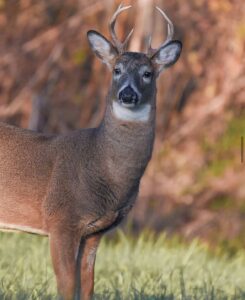
The temperatures drop and the leaves change. Maybe you’re suddenly more inclined to indulge in some seasonal pumpkin-flavored fare.
But these aren’t the only signs of fall. We also start to see more deer this time of year. No matter what the season, the white-tailed deer (Odocoileus virginianus) is perhaps Ohio’s most well-known mammal. But we see more of them in late fall, as that’s the peak of their mating season — also known as their “rut.” This causes them to become more active and change locations more frequently. During rut, bucks (male deer) aggressively search for does (female deer), and their behavior shifts from the “October lull,” when bucks walk around in pairs with other bucks, to searching for potential mates on their own.
It’s also during this time frame that fawns (baby/young deer) lose their spots and become more independent and less reliant on their mothers. Meanwhile, all of the deer are foraging for food before winter. Whitetail deer are active around the clock, but less so during daylight hours, with most of their movement occurring at dawn and dusk.
All of this activity leads to more sightings — and more potential for collisions on our roadways. Reports for 2024 are not yet finalized, but the Ohio State Highway Patrol reported nearly 110,000 deer-related accidents between 2019 and 2023. Of those, 47 percent occurred in October, November, and December.
Drivers should remember these tips during breeding season: Slow down and be attentive while driving through zones marked with deer signs, especially around dawn and dusk:
• If you see one deer, assume there are others nearby
• Prepare for sudden stops and always wear a seatbelt
• If you hit a deer, pull your car to the side of the road, turn on your hazard lights and report the incident to local police.
The non-profit Lake Erie Nature & Science Center provides free wildlife education and rehabilitation services to the public. If you have a question about local wildlife, please call 440-871-2900 to speak with a wildlife expert.


