

Springtime reminders for baby wildlife season
April 8, 2025
Posted by Lake Erie Nature and Science Center
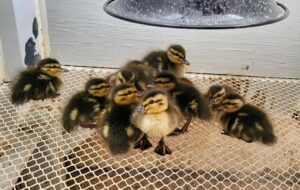
Spring is here which means baby season for local wildlife. As wildlife rehabilitators prepare for their busiest time of the year, Lake Erie Nature & Science Center is sharing important reminders as you encounter baby wildlife this season.
Do not assume baby wildlife is abandoned
Baby wildlife is rarely abandoned. Many species leave their young unattended for hours. For example, it is perfectly normal to see a fawn lying quietly by itself. The mother will come back at dusk and dawn to care for it. Likewise, Eastern cottontails do not stay with their nests and return twice a day to feed their babies. They do this to avoid attracting predators with their presence.
There are certain baby animals that should never be on their own including ducklings, goslings, gull chicks and opossum babies. If you find one, contact a wildlife rehabilitator as soon as possible.
Allow wildlife to grow up in their natural environment
Baby animals are vulnerable, yet resilient. Predators and other threats are a natural part of their environment. While it can be tempting to care for baby wildlife and protect them from danger, they must learn the critical skills necessary to survive in the wild.
Check your yard for nests
Check your yard before cutting the grass, as Eastern cottontails often build their nests in the middle of lawns. If you find a nest, do not move the baby bunnies – even if the nest seems to be in a bad location – or their mother will be unable to find them.
You should also check for bird nests before trimming branches and other landscaping. If you find a baby bird out of the nest that has visible skin, place it back in its nest or in an artificial nest. If the bird is fully feathered but unable to fly, leave the bird alone. These birds are in the fledgling stage, where baby birds leave the nest to learn critical survival behaviors.
Do not feed or provide care for baby wildlife
Baby wildlife cannot receive the same level of care from humans as they would from their parents. If you find a baby, do not give it food or water. Each species requires a specialized diet and feeding an animal the wrong food can be harmful to its health.
Monitor your pets
Remember to monitor your pets and keep cats indoors, especially during baby wildlife season. Your supervision will not only protect baby animals and other wildlife, but keep your pets safe, too.
Call a wildlife rehabilitator if you find an injured animal
If you find an injured animal or have questions about local wildlife, please call the nonprofit Lake Erie Nature & Science Center at 440-871-2900 x204 before intervening. The Center provides wildlife rehabilitation services 7 days a week between 9 a.m. and 4 p.m. at no charge to the public.
Thank you to The Kenneth A. Scott Charitable Trust, a KeyBank Trust, for supporting Lake Erie Nature & Science Center’s wildlife education and rehabilitation program.


