

A Cold Weather Invitation to Birding
January 28, 2026
Posted by Lake Erie Nature and Science Center
The thermometer reads 28 degrees (if we’re lucky). “Lake effect” feels like a personal affront under our gray winter skies. Most people are inside with their coffee.
But here’s what they’re missing: Winter is one of the best times to watch birds in Northeast Ohio.
I know. I get it. You’re thinking about frozen fingers and wind chill and the general misery of standing outside in January.
But there’s an old saying among outdoor enthusiasts that applies perfectly here: There’s no such thing as bad weather, only bad gear. First and foremost, you have to be prepared.
Dress for success
The secret to enjoying winter birding is in your preparation. Start with a good base layer, add insulating mid-layers and top it off with a windproof shell (jacket).
Waterproof boots rated for cold temperatures, preferably insulated, will make a world of difference. Nothing ends a birding outing — or any outdoor endeavor for that matter — faster than wet, cold feet.
Toss on a warm hat, gloves that still allow you to operate binoculars and maybe some hand warmers for those single-digit mornings.
Suddenly, that 28-degree day feels manageable. Pleasant, even!
Clarity in unclear skies
Winter light in Northeast Ohio is notoriously dim. Short days and overcast skies mean your standard binoculars might not cut it.
This is when you want binoculars with larger objective lenses. The larger the lens — think 42mm or larger — the more light gets transmitted to your eye, making birds easier to spot in the gray dawn or the fading afternoon.
It’s the difference between seeing a blur and seeing the subtle rust wash on a female cardinal’s wing.
The sound of silence (and birds)
Here’s one of winter’s hidden gifts: You can actually hear the birds.
In summer, trees have more foliage, so bird calls get muffled and absorbed. But winter’s bare branches carry calls and songs like a bell.
Learning to bird by ear takes practice, but winter gives you the acoustics to accelerate that learning.
Start simple
Don’t be burdened by rare sightings or bucket list additions. Focus first on the birds that make Northeast Ohio home all winter long.
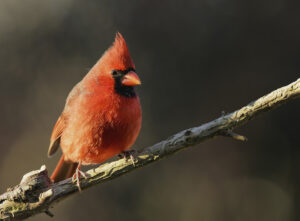
Northern cardinals are everywhere and tend to be easier to spot due to their vibrant colors. Blue jays also have bright-colored plumage, as well as loud voices.
At your feeders, look for the charcoal-hooded dark-eyed juncos and tufted titmice with their punk-rock crests.
Lake Erie’s shore and our inland lakes and rivers are great for finding ducks and geese.
Mallards are a good starting point, but you might spot buffleheads — those compact diving ducks with oversized heads — or see a flock of Canada geese in a V formation overhead.
My personal favorite are the raptors. Winter is hawk season. Red-tailed hawks perch stoically in bare trees. Cooper’s hawks zip through back yards. Bald eagles are often spotted along the shoreline.
If you’re lucky, you might catch a rough-legged hawk hovering over a field as it scans for prey beneath the snow.
Where to look
To spot a bird, sometimes you have to think like a bird. And birds in winter are thinking about two main things: food and shelter.
Check areas with food sources — berry-laden bushes, seed-bearing plants, active feeders, etc.
Waterfowl need open water, so focus on any unfrozen patches of rivers or still water.
Raptors hunt open fields and perch along tree lines where they can better survey their hunting grounds. That intersection between field and forest is prime real estate.
Just get out there
While winter birding won’t give you the variety of spring migration, it offers something else — clarity. There are usually fewer people and also less foliage.
It’s meditative in a way that warmer seasons aren’t. Just you, the cold and the birds tough enough to stick around.
So bundle up. Grab those (42mm-plus) binoculars. Head to a local park or nature preserve. Stand still for a moment and listen.
Winter in Northeast Ohio is quieter than you think, but it’s far from silent. And it’s waiting for you.
We can help!
Still feel a little apprehensive about getting out there on your own, but want to see some cool birds? Lake Erie Nature & Science Center offers free general admission seven days a week from 9 a.m. to 4 p.m.


